Lithium alloys for solid-state batteries
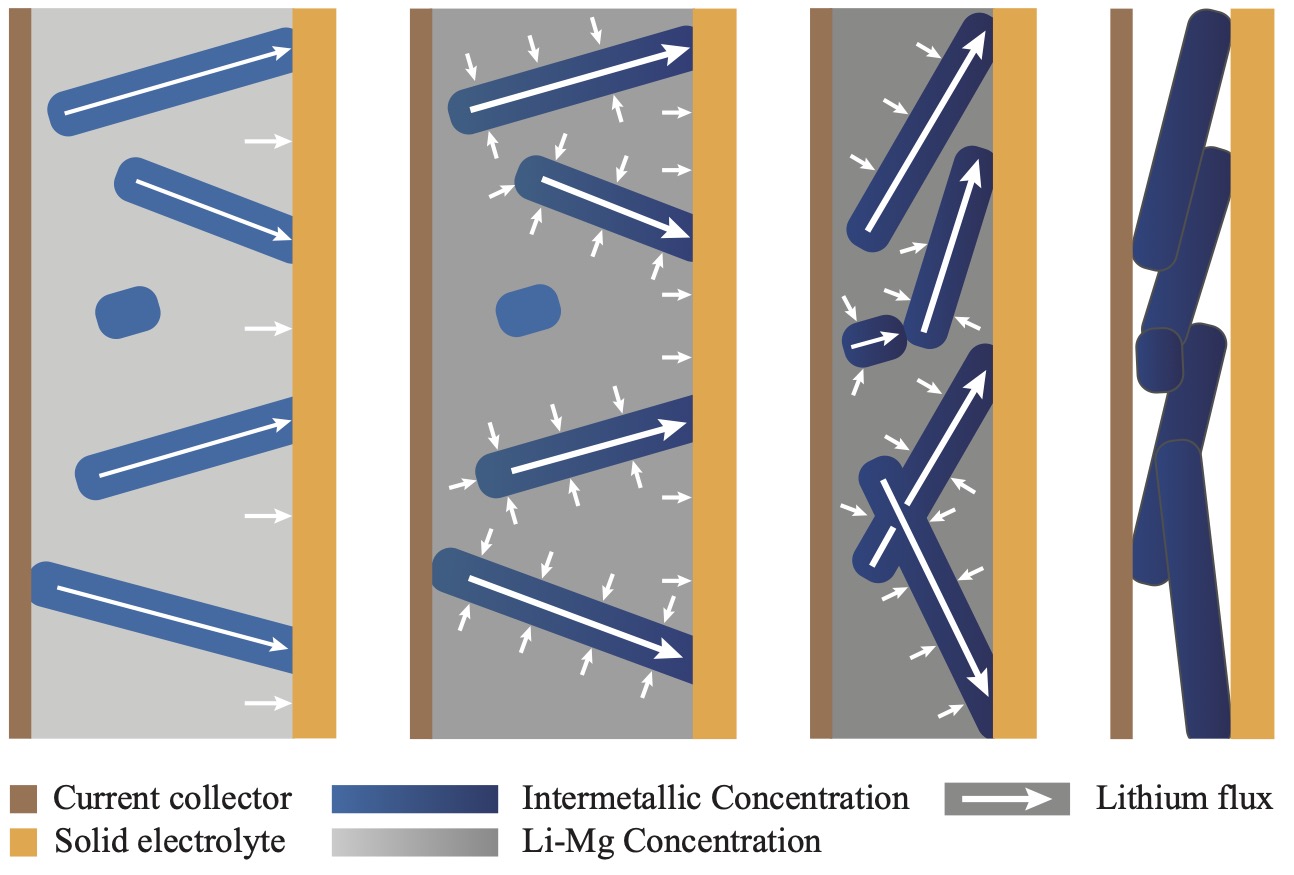
We demonstrate that the rapid lithium diffusivity in the Li₃Bi intermetallic, when combined with a lithium–magnesium matrix, provides continuous fast lithium diffusion pathways that alleviate typical transport limitations during discharge. Experimental measurements, supported by computational modelling, quantify the influence of both microstructural features and intermetallic properties on electrochemical performance.
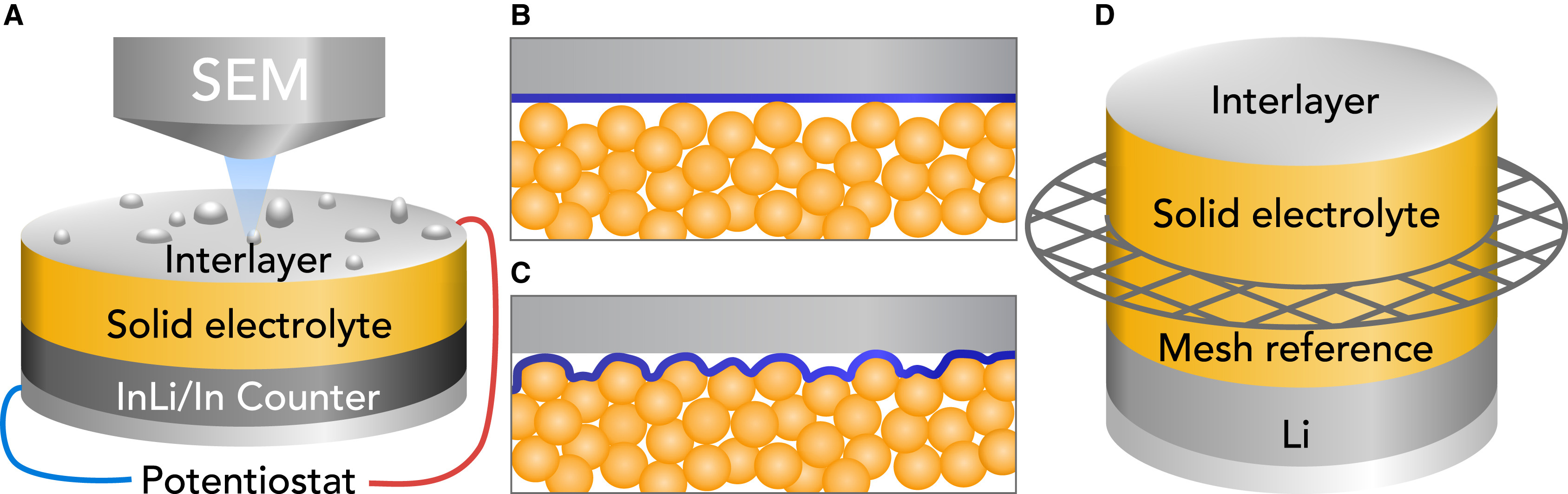
We employ operando scanning electron microscopy to directly visualise lithiation dynamics within alloy interlayers and the subsequent evolution of lithium plating at the solid electrolyte interface. The results establish design principles for controlled plating and interfacial stabilisation, providing new pathways to improve the performance, lifetime, and commercial viability of anode-less solid-state batteries.
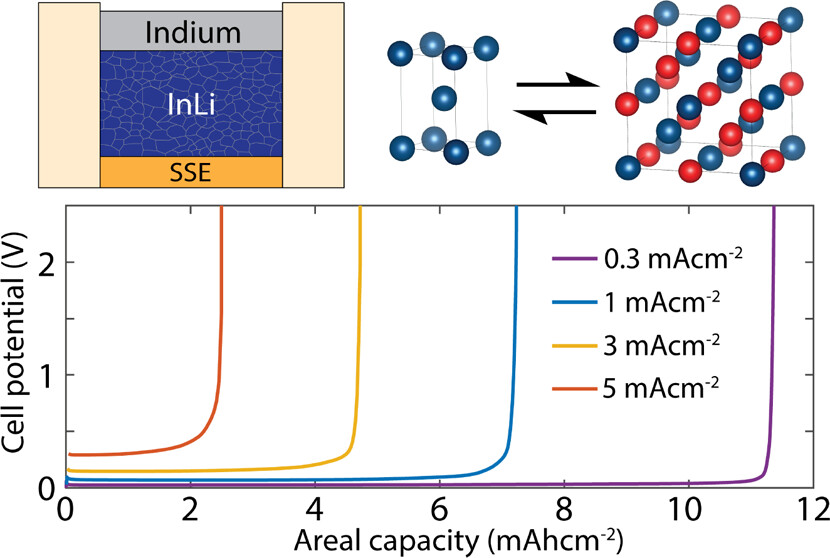
Whilst the InLi intermetallic has extremely fast lithium diffusion, the indium metal phase is essentially lithium-blocking, so performance is tied to the microstructure, which evolves with cycling. A simple two-layer microstructure is proposed, based on the fundamental understanding established, which maximises performance.
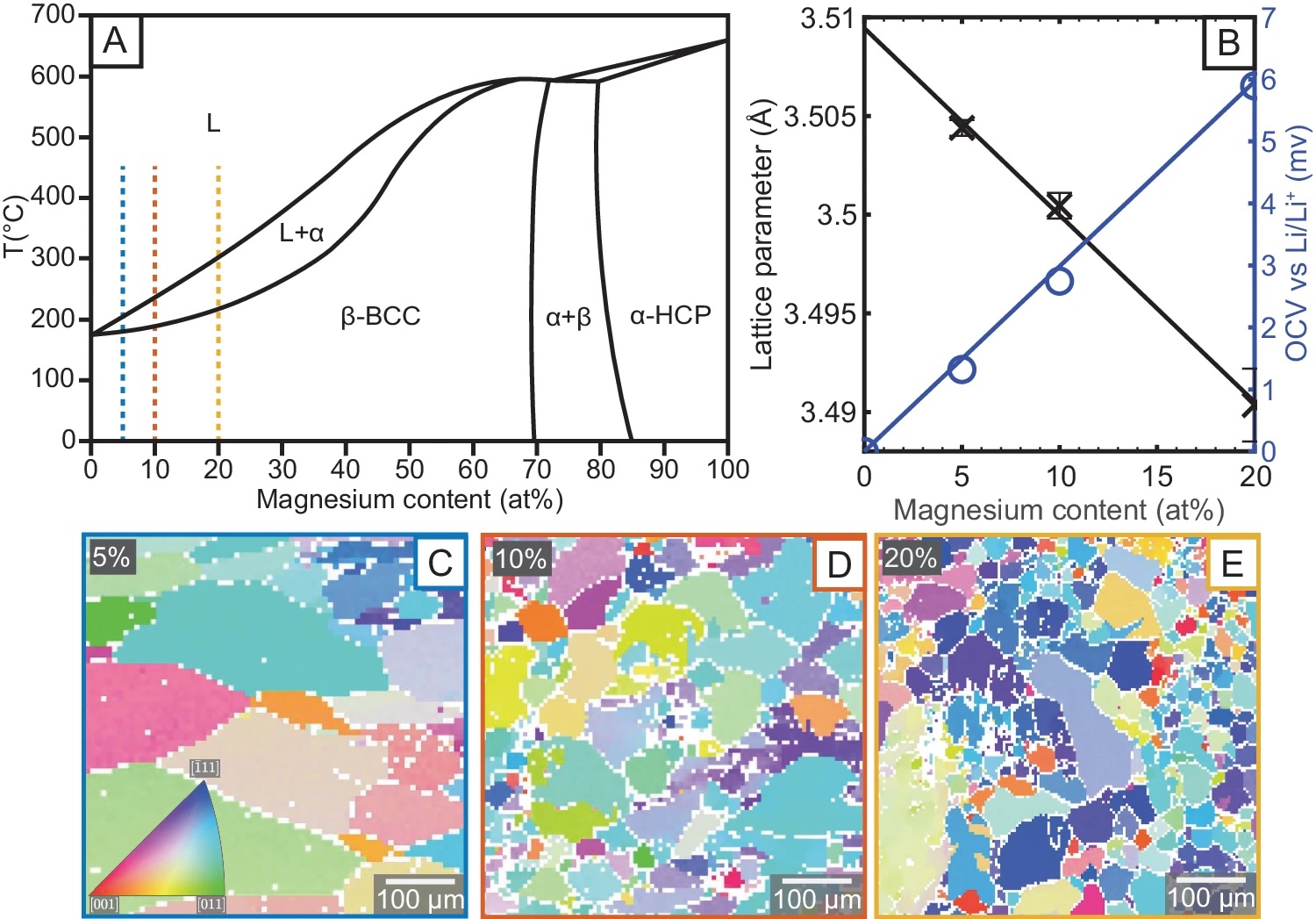
We synthesise and characterise lithium-rich magnesium alloys, quantifying the changes in mechanical properties, transport, and surface chemistry that impact electrochemical performance. We observe an improvement in contact retention on discharge, which must be balanced against a decrease in lithium diffusivity: 1% magnesium content increases stripping capacity compared to both pure lithium and higher magnesium content alloys.
Mechanics and microstructure
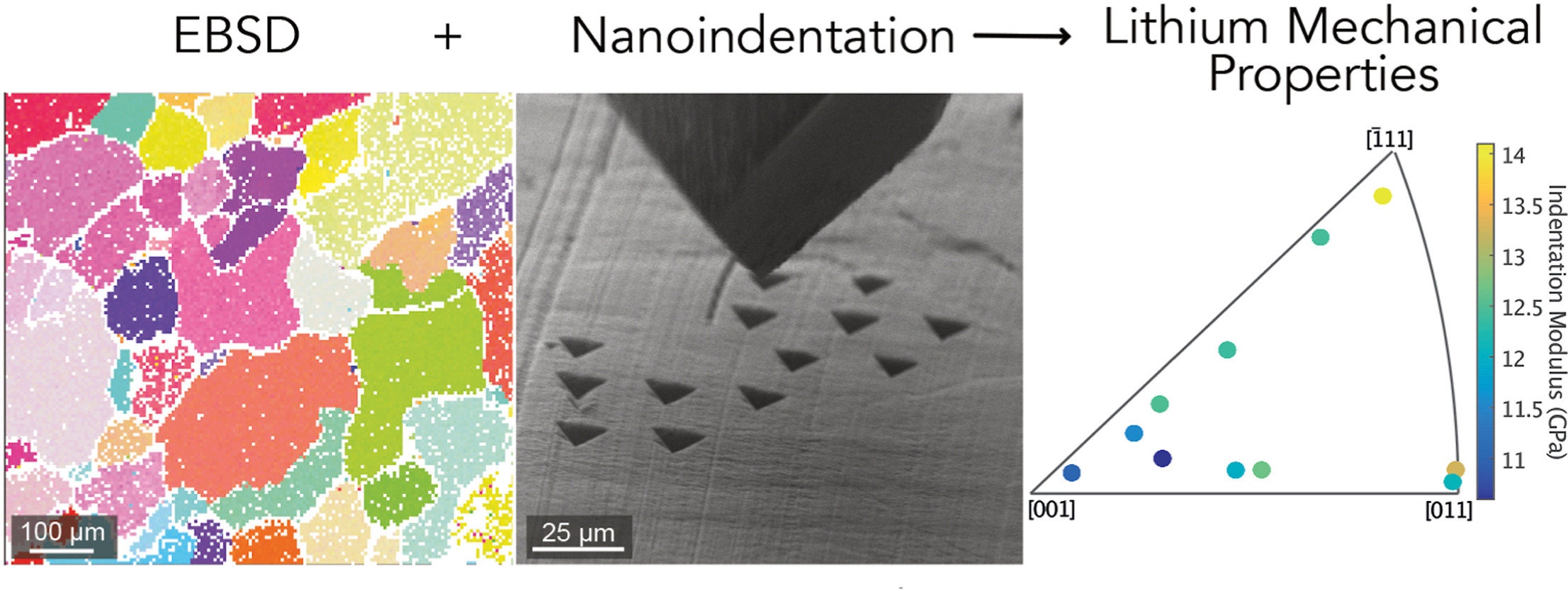
The elastic and plastic properties of lithium are measured by nanoindentation within an electron microscope, with the crystallography of the samples characterised by electron backscatter diffraction before and after indentation. Hardness measurements show a clear size effect, with hardness in excess of 100 MPa observed for indent depths below 300 nm, which could contribute toward observed lithium filament propagation.